
Table of Contents
- What Is Incentive Compensation Management?
- Why ICM Matters Now
- Who Needs ICM Software
- ICM vs. SPM: What's the Difference?
- How the Incentive Compensation Management Process Works
- Legacy ICM vs. Modern ICM Platforms
- When to Replace Your ICM System
- How to Evaluate ICM Platforms
- Incentive Compensation Management FAQs
- The Bottom Line
What Is Incentive Compensation Management?
Incentive compensation management is the process of designing, calculating, administering, and optimizing the variable pay programs that tie employee earnings to performance.
In practice, that means everything from a straightforward commission percentage on a closed deal to a multi-layered compensation structure spanning thousands of people, dozens of plan types, and multiple countries.
Here’s an example of how quickly it gets complicated. A $250,000 software deal closes. The account executive earns 60% of the commission credit. An overlay specialist who supported the technical evaluation receives 20%. A channel partner who sourced the opportunity gets the remaining 20%. But the deal includes three products: one at full margin, one at a promotional rate, and one on a consumption basis, with revenue recognized over 24 months. Each product has different accelerator thresholds. The AE is assigned to two territories following a mid-quarter realignment. The channel partner agreement uses a different rate table from the direct sales rate table.
That single transaction now touches crediting rules, split calculations, product-level rates, consumption-based recognition, territory assignment logic, and partner agreements. Multiply that by thousands of transactions per month across a global organization, and you begin to see why spreadsheets break.
Incentive compensation management software exists to handle this complexity systematically. A purpose-built ICM platform automates the calculation, reporting, and governance of variable pay — replacing the manual processes that create errors, disputes, and operational bottlenecks as organizations scale.
Why ICM Matters Now
Three trends are making incentive compensation management more critical — and more difficult — than it was five years ago.
Revenue models are changing. The shift from one-time bookings to consumption-based, subscription, and usage-based revenue means compensation plans now need to account for revenue that is recognized over time.
Sales roles are multiplying. The number of people touching a deal has expanded significantly:
- Pod-based selling models with shared credit
- Overlay specialists supporting but not owning the relationship
- Customer success roles with revenue responsibility
- Channel and partner ecosystems with distinct rate tables
Each role needs distinct compensation logic, crediting rules, and visibility into earnings. A single plan structure no longer works.
Compliance requirements are tightening. ASC 606 and IFRS 2 have changed how commission expenses are recognized and amortized. Add SOX compliance, audit trail requirements in regulated industries, and multi-jurisdiction governance for global organizations, and the demand is clear: a system of record, not a collection of spreadsheets maintained by one person who understands the formulas.
Who Needs ICM Software

VP of Sales Operations / Head of Compensation — The person who lives in plan design and administration. Their priorities:
- Plan change agility: Can modifications happen in hours, or does every change require an SI engagement?
- Dispute resolution: Is there a structured workflow, or is it email chains and spreadsheets?
- Team independence: Can the comp team run the system themselves, or are they dependent on consultants for ongoing configuration?
CFO / Finance Leadership — Incentive compensation is one of the largest controllable expenses on the P&L. Finance evaluates ICM platforms on:
- Accurate accruals and ASC 606 / IFRS 2 compliance
- Full audit trails for internal and external review
- Ability to model compensation cost scenarios before committing to plan changes
- Total cost of ownership — not license fees alone, but implementation, consulting, and administration costs combined

CRO / Head of Sales — The question is simple: does the comp plan drive the right behavior? What they care about:
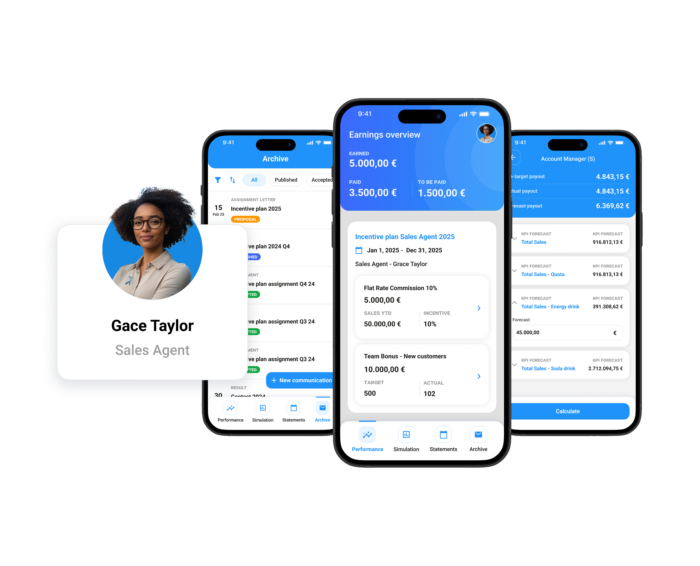
- Rep visibility into real-time earnings, not batch reports from yesterday
- Connection between daily activity and financial outcomes
- The speed at which plans can adapt to changing market conditions
- Retention impact — when reps trust their numbers, attrition drops
Sales Compensation Admin — The person stitching together data from CRM, ERP, and HRIS, running calculations, and managing the fallout when a plan changes midyear. Admins evaluate platforms on:
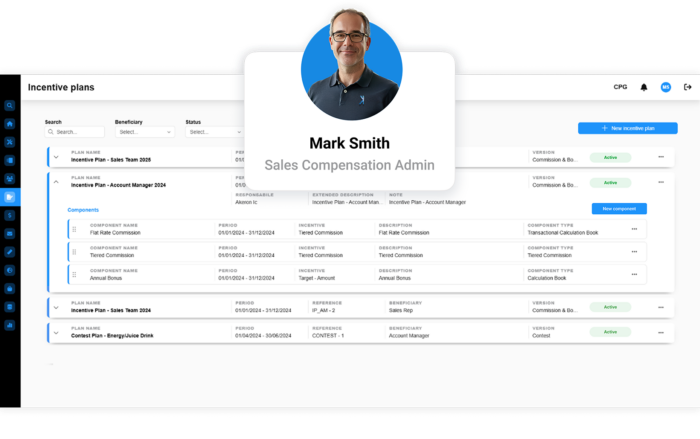
- Self-service plan configuration without writing code
- Data integration that doesn’t require manual reconciliation
- Multi-entity and multi-currency support that works natively
- Dispute management tools that reduce resolution time
ICM vs. SPM: What's the Difference?
These terms are often used interchangeably, but they describe different scopes.
ICM (Incentive Compensation Management) is the execution engine. It handles the calculation, payment, and administration of variable compensation — commissions, bonuses, SPIFs, MBOs, and long-term incentives. It ensures people get paid correctly, on time, and in compliance with plan rules.
SPM (Sales Performance Management) is the broader strategic category. It encompasses ICM but also includes territory and quota planning, sales forecasting, coaching and analytics tools, and, in some platforms, commercial agreement and trade promotion management.
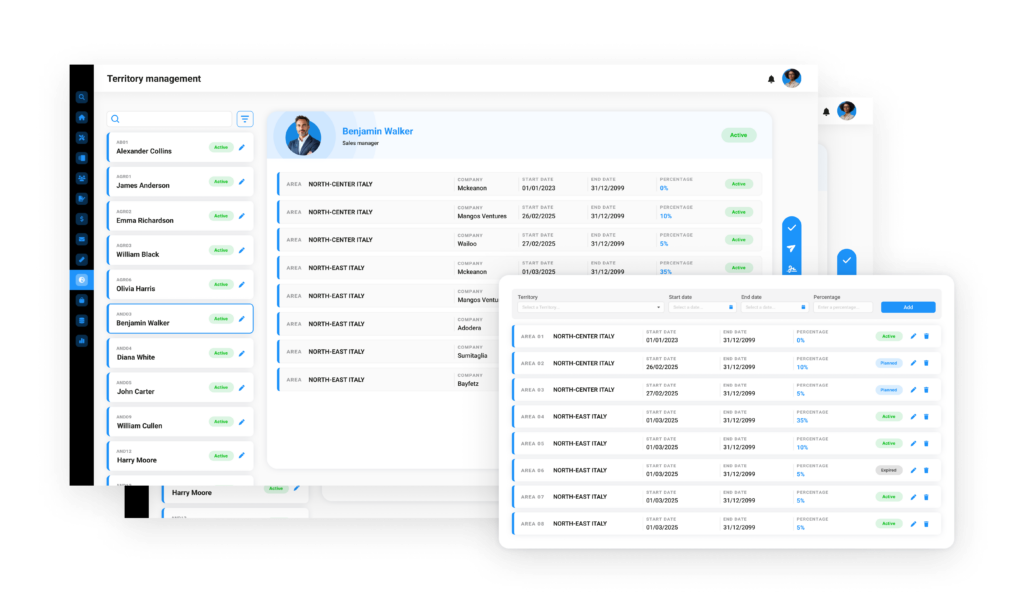
The practical implication: if you only need commission calculation and payment, an ICM-focused tool may suffice. If your organization also needs integrated territory planning, quota setting, and commercial performance management on a single data model, you need an SPM platform with strong ICM capabilities.
The advantage of the unified approach is that your compensation, territory, and commercial performance data all live in one system. No reconciliation across tools and no version-of-truth problem.

How the Incentive Compensation Management Process Works
Regardless of what platform an organization uses, the ICM lifecycle follows a consistent sequence. Understanding this process is essential for evaluating where your current approach breaks down.
- Plan Design and Modeling.Compensation plans define how performance translates into pay: base/variable splits, quota assignments, rate tables, accelerators, decelerators, SPIFs, and special program rules. Modern approaches allow simulation before deployment: testing thefinancial impact of proposed changes against historical data before anything goes live.
- Crediting Rules and Assignments.The systemdetermines who gets credit for each transaction. This is where complexity compounds:
- Split credits across multiple roles on a single deal
- Overlay and specialist assignments
- Territory-based crediting with geographic rules
- Channel partner attribution
- Product-level crediting rules
Getting crediting wrong is the single most common source of compensation disputes.
- Data Ingestion.Transaction dataflows in from CRM, ERP, billing, HRIS, and potentially usage or consumption tracking systems. The quality and timeliness of this data directly affect calculation accuracy. Modern ICM platforms offer pre-built connectors and semantic data interpretation layers that normalize incoming data regardless of source format.
- Calculation and Validation.The engine applies plan rules to credited transactions and produces payout amounts. Calculations should run in real time — not in overnight batch processes that delay visibility by a day or more. Validation workflows allow compensation teams to review and confirm results before payments are released.
- Dispute Resolution.Repsidentify discrepancies between expected and calculated earnings. A structured dispute workflow — with audit trails showing exactly how each calculation was derived — reduces resolution time from days to hours.
- Approvals and Payouts.Calculated commissions flow through approval chains before being sent to payroll or finance. Approval workflows should be configurable by plan type,amount threshold, or exception condition.
- Reporting, Analytics, and Accruals.Different stakeholders need different views of the same data:
- Reps: Real-time earnings dashboards and deal-level detail
- Managers: Team performance summaries and attainment tracking
- Finance: Accrual reports, ASC 606 / IFRS 2 compliance documentation
- Executives: Portfolio-level compensation intelligence for strategic decisions
Legacy ICM vs. Modern ICM Platforms
The ICM market has evolved significantly, but many organizations are still running platforms — or processes — designed for a simpler era. Here’s where the approaches diverge.
Capability | Legacy ICM Platforms | Modern ICM Platforms |
Plan changes | SI-led, weeks to implement, five-figure cost per change | Admin-led, hours to implement, no external dependency |
Processing | Overnight batch runs; reps see yesterday’s data | Real-time calculation; reps see live earnings position |
Complexity handling | Requires customization per entity, currency, hierarchy | Native multi-entity, multi-currency, multi-hierarchy |
User experience | Built for administrators; reps have limited visibility | Dashboards for reps, managers, finance, and executives; mobile access |
Auditability | Partial audit trails; manual documentation | Full audit trail with automated compliance reporting |
Integration | Custom ETL per data source | Pre-built connectors with semantic data interpretation |
Cost structure | License + annual SI retainer + per-change consulting fees | License + self-service administration; no mandatory SI dependency |
The total cost of ownership difference is significant. Organizations often find that SI retainer and per-change consulting fees on legacy platforms exceed the platform’s license cost. A system that requires $200,000+ in external consulting annually to operate is not a $150,000 platform — it’s a $350,000 platform.
When to Replace Your ICM System
Not every organization needs a new platform. But there are clear signals that the current approach is creating more cost than value.
Your comp plans have outgrown your platform. What started as straightforward quota-to-commission now includes regionalized crediting rules, product-specific accelerators and decelerators, consumption-based models, and multi-year deal structures. Each new requirement requires custom development.
Every plan change requires a project. New product launch? Territory realignment? Midyear adjustment? If modifying a comp plan means opening a ticket with your systems integrator, waiting weeks, and spending five figures, the platform is working against you.
Your reps don’t trust their numbers. Shadow spreadsheets are a symptom, not a cause. When reps build their own tracking tools because the system doesn’t give them real-time visibility, you have a trust problem — and trust problems drive attrition of your best performers.
You’re paying enterprise prices for enterprise frustration. The license is one line item. The SI retainers, the consultant hours for plan changes, and the training costs are where the real spending lives: the interface was designed for administrators circa 2012.
If these challenges sound familiar, Vulki by Akeron offers a different model — enterprise-grade ICM built for multi-entity, multi-currency complexity, where your compensation team runs the system without consultant dependency.
Organizations that have made the switch:
- Groupe Bel France — a global food company managing complex commercial structures across multiple European markets — completed a full Vulki implementation in three months, replacing manual reconciliation across regional systems.
- HDI Assicurazioni — an Italian insurance group with a large agent network and complex tiered commission structures — achieved a 70% reduction in manual compensation activities and moved to fully paperless administration.
- Juventus FC — reduced manual compensation operations by 80%, consolidating player and commercial incentive management into a single platform.
How to Evaluate ICM Platforms
For organizations in the market, whether replacing a legacy platform or moving beyond spreadsheets, here’s a practical evaluation framework.
Start with complexity, not features. The first question isn’t “what can the platform do?” It’s “can the platform handle the complexity we actually have?” During evaluation:
- Ask vendors to demonstrate multi-entity, multi-currency, and multi-hierarchy scenarios with your data
- Ask them to show a plan change workflow — and specifically who performs it
- Bring your most complex plan and ask them to configure it live
Evaluate the total cost of ownership. Request a three-year TCO analysis that includes:
- Implementation and onboarding costs
- Annual consulting or SI fees
- Per-change costs for plan modifications
- Training and internal administration time
- The license fee is never the full picture
Test plan change agility in real time. Ask the vendor to change a plan rule during the evaluation. How long does it take? Who does the work? Can your admin execute it, or is it a development project?
Assess integration architecture. Your ICM platform needs to ingest data from CRM, ERP, HRIS, and potentially billing and consumption tracking systems. Evaluate pre-built connectors, API architecture, and data volume capacity.
Confirm third-party recognition and customer references. Analyst validation provides independent credibility. Vulki by Akeron is recognized in the Gartner Market Guide for Sales Performance Management and named an Exemplary Provider in the ISG Buyer’s Guide for SPM and ICM — across three categories: ICM, SPM, and Revenue Performance Management. Enterprise references across financial services, consumer goods, insurance, and retail are available for qualified evaluations.
Incentive Compensation Management FAQs
What is incentive compensation management (ICM)? ICM is the process of designing, calculating, administering, and optimizing variable pay programs — including sales commissions, bonuses, SPIFs, and MBOs — that connect employee earnings to performance outcomes.
What is the difference between ICM and commission management? Commission management is a subset of ICM focused specifically on calculating and paying sales commissions. ICM is broader: it includes commission management but also covers non-sales incentives, long-term incentive plans, MBOs, contest and SPIF programs, and the governance and compliance layer around all variable pay.
What is the difference between ICM and SPM? ICM is the calculation and administration engine for variable compensation. SPM (Sales Performance Management) is the broader category that includes ICM plus territory and quota planning, sales analytics, forecasting, and, in some platforms, commercial agreement and trade promotion management.
How does ICM software calculate commissions? ICM software applies plan rules: rate tables, accelerator thresholds, crediting logic, and quota-attainment calculations—to transaction data ingested from CRM, ERP, and other source systems. Calculations can run in real time or in batch, depending on the platform. The output is a payout amount per payee per period, supported by a full audit trail showing how each number was derived.
What are common incentive compensation plan types? The most common structures include:
- Quota-based commission: Percentage of revenue or margin against a target
- Tiered / accelerator plans: Increasing rates at higher attainment levels
- Flat-rate commission: Fixed percentage per transaction
- MBO-based bonuses: Tied to qualitative or quantitative objectives
- SPIFs: Short-term incentive programs for specific behaviors or products
- Draw against commission: Guaranteed minimum with future offset
- Consumption / usage-based plans: Tied to recurring or recognized revenue over time
How do companies manage compensation disputes? Effective dispute management requires transparency — reps need to see how their earnings were calculated at the transaction level. Modern ICM platforms provide:
- Self-service dispute submission by reps
- Automated routing to the appropriate reviewer
- Audit trail visibility showing the full calculation logic
- Structured resolution workflows with documented outcomes
What should enterprises look for in ICM software? The critical evaluation criteria:
- Native complexity handling (multi-entity, multi-currency, multi-hierarchy)
- Plan change agility (admin self-service vs. SI dependency)
- Real-time calculation and rep-facing dashboards
- Integration architecture for enterprise data sources
- Compliance and governance capabilities (audit trail, ASC 606 / IFRS 2, role-based access)
- Total cost of ownership — not just license fees
- Third-party analyst recognition and verifiable customer references
The Bottom Line
Incentive compensation management is not a back-office function. It is one of the most powerful levers an organization has to drive revenue behavior, retain top performers, and control one of the largest variable expenses on the P&L.
The platform you choose determines whether that lever works for you or against you. For organizations whose compensation complexity has outgrown their current approach, Vulki by Akeron delivers enterprise-grade ICM and SPM on a single platform—built for the complexity of modern sales organizations and agile enough to adapt as that complexity evolves. Recognized by Gartner and ISG. Trusted by Samsung, Haier Europe, Lavazza, Intesa Sanpaolo, Costa Cruises, Daikin, and enterprises across financial services, consumer goods, manufacturing, insurance, and retail.
Consumption-Based Compensation Webinar
On Demand
Learn how to align sales compensation with consumption-based growth.